Hi, I'm Leonid
About
I trained as a physician at Yakutsk State University (now North-Eastern Federal University) and headed hospital MRI and radiology departments in Yakutsk for 13 years. Alongside the clinic I worked with a molecular-genetics group on hereditary hearing loss in the Sakha Republic, bringing inner-ear CT and MRI to studies of SLC26A4 and POU3F4 variants and contributing to studies of GJB2 (publications). From 2022 until I closed it in mid-2026, I ran my own clinical-AI startup, Medcol, in Dubai.
Since August 2026 I have been an MSc student in Computational Biology at MBZUAI. My course project asks whether cells respond to a CRISPRi knockdown like a switch or like a dial, tested on held-out cells of the Replogle K562 essential-gene Perturb-seq screen; the results can be browsed in an interactive dose–response atlas. I am interested in perturbation biology and dose–response, evaluation on held-out data, and AI-assisted analysis that a scientist can audit.
Experience


Skills
Check out my latest work
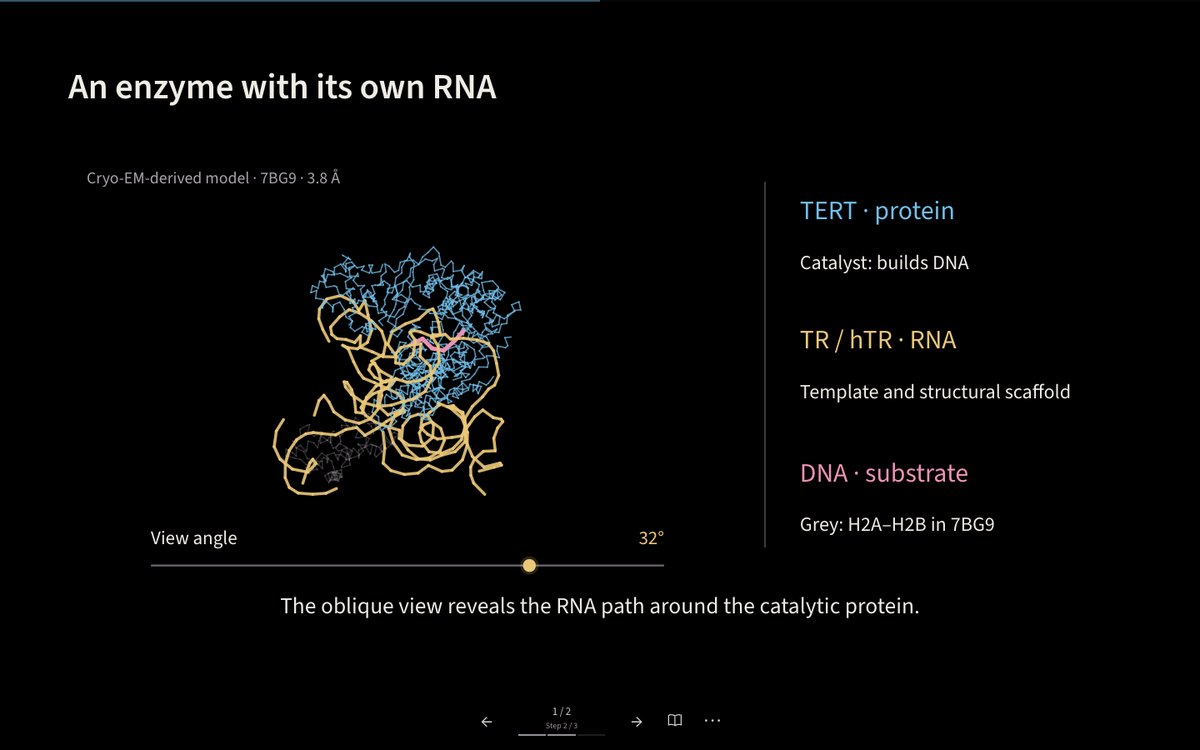
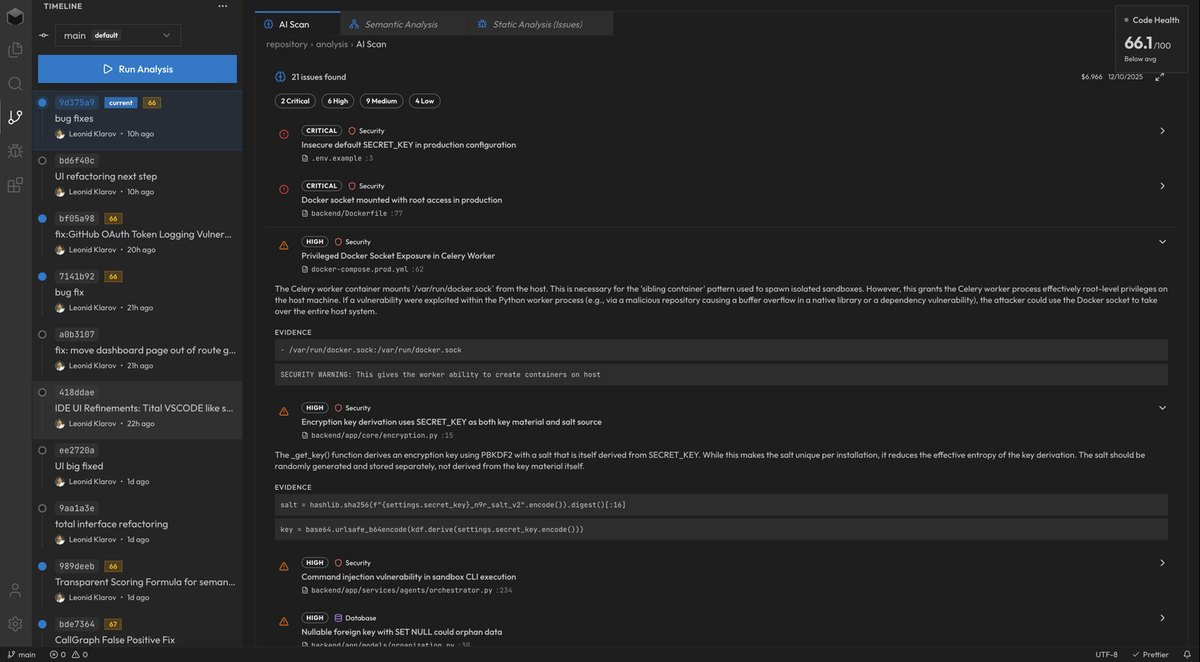
I build the tools my research needs: an interactive atlas for my course project, a cluster workbench where coding assistants run single-cell analyses, and a kit for explaining science visually.
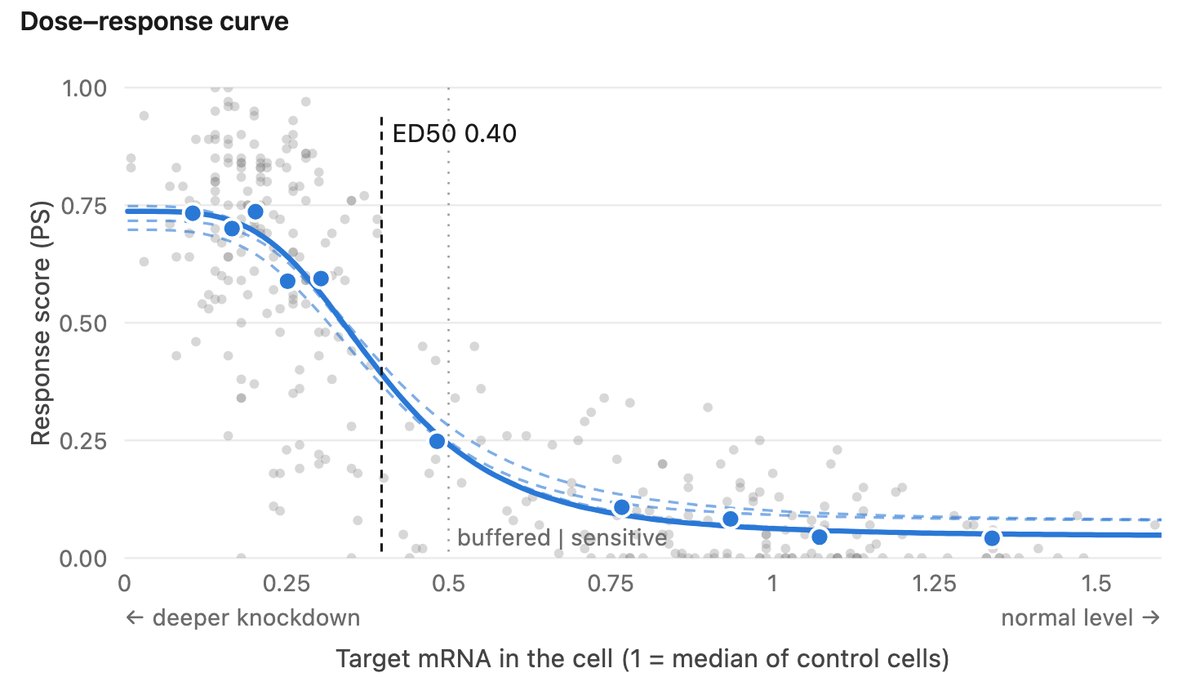
Course project for CBIO7215 at MBZUAI. On held-out cells of the Replogle K562 essential-gene CRISPRi screen I tested whether per-cell knockdown strength forecasts responses better than a binary label, and whether cells respond like a switch or a dial. The atlas covers 2,057 genes and gives an ED50 with reliability checks for the 515 with a visible dose–response curve.

A lab bench for single-cell biology on the MBZUAI Slurm cluster, driven by a coding assistant (Codex or Claude) over MCP. Each step is a cell that states why it runs and what it should show; heavy steps become Slurm jobs, and everything lands in a journal the student reviews.
Imaging meets genetics
Before computational biology I worked with a molecular-genetics group in Yakutsk. Six of these 7 papers study hearing loss and its genetics in Siberia (five in the Sakha Republic, one in Buryatia); three use inner-ear CT or MRI, two of them alongside sequencing. The same list is on ORCID.
Analysis of SLC26A4, FOXI1, and KCNJ10 gene variants in patients with incomplete partition of the cochlea and enlarged vestibular aqueduct (EVA) anomalies
International Journal of Molecular Sciences 23(23): 15372
Klarov LA, Pshennikova VG, Romanov GP, Cherdonova AM, Solovyev AV, Teryutin FM, Luginov NV, Kotlyarov PM, Barashkov NA
CT of 165 deaf patients found incomplete partition of the cochlea and/or an enlarged vestibular aqueduct in six; four of them carried biallelic SLC26A4 variants, and AlphaFold modelling supported the pathogenicity of a variant of uncertain significance.
Analysis of hearing thresholds in patients with hearing impairments associated with mutations of the GJB2 gene (Cx26) in Buryatia
Yakut Medical Journal No. 4 (80): 36–39
Teryutin FM, Pshennikova VG, Romanov GP, Solovyov AV, Klarov LA, Lebedeva NA, Barashkov NA
The spectrum and frequency of inner ear anomalies in patients with congenital hearing impairment in Yakutia
Journal of Radiology and Nuclear Medicine 101(2): 90–102 (in Russian)
Klarov LA, Barashkov NA, Teryutin FM, Romanov GP, Popov MM, Solov'ev AV, Luginov NV, Tobokhov AV, Kotlyarov PM
Temporal-bone CT of 165 patients with congenital hearing loss found inner-ear malformations in 16 (9.7%); incomplete partition type II was the most common.
Resection of a kidney tumor with superselective targeted balloon-occluded chemoembolization
Cancer Urology 16(4): 49–58 (in Russian)
Maksimov AV, Martov AG, Neustroev PA, Alekseev VA, Peretolchin DV, Klarov LA, Neustroev EI, Kladkin NP
Laparoscopic kidney-tumour resection with superselective balloon occlusion of a segmental renal artery and intra-arterial chemoembolization, tested in 14 rabbits and by contrast-agent measurements in 13 patients.
A novel pathogenic variant c.975G>A (p.Trp325*) in the POU3F4 gene in Yakut family (Eastern Siberia, Russia) with the X-linked deafness-2 (DFNX2)
International Journal of Pediatric Otorhinolaryngology 104: 94–97
Barashkov NA, Klarov LA, Teryutin FM, et al.
A new hemizygous POU3F4 stop variant in two deaf half-brothers with the inner-ear malformation typical of DFNX2; CT and MRI also showed enlarged semicircular canals, and the female carrier had milder signs.
Spectrum and frequency of the GJB2 gene pathogenic variants in a large cohort of patients with hearing impairment living in a subarctic region of Russia (the Sakha Republic)
PLOS ONE 11(5): e0156300
Barashkov NA, Pshennikova VG, Posukh OL, Teryutin FM, Solovyev AV, Klarov LA, et al.
Complete GJB2 sequencing in 393 patients and 187 controls: biallelic pathogenic variants in 48.9% of patients, with c.-23+1G>A the most frequent variant in Yakut patients.
Age-related hearing impairment (ARHI) associated with GJB2 single mutation IVS1+1G>A in the Yakut population isolate in Eastern Siberia
PLOS ONE 9(6): e100848
Barashkov NA, Teryutin FM, Pshennikova VG, Solovyev AV, Klarov LA, et al.
In 48 heterozygous carriers of the Yakut founder variant IVS1+1G>A, hearing thresholds rose with age and high-frequency hearing was worse than in 97 non-carriers, linking a single GJB2 variant to age-related hearing loss.
Get in Touch
The best way to reach me is e-mail: leonid.klarov@mbzuai.ac.ae. I'm happy to talk about computational biology research, single-cell perturbation data or medical imaging.